




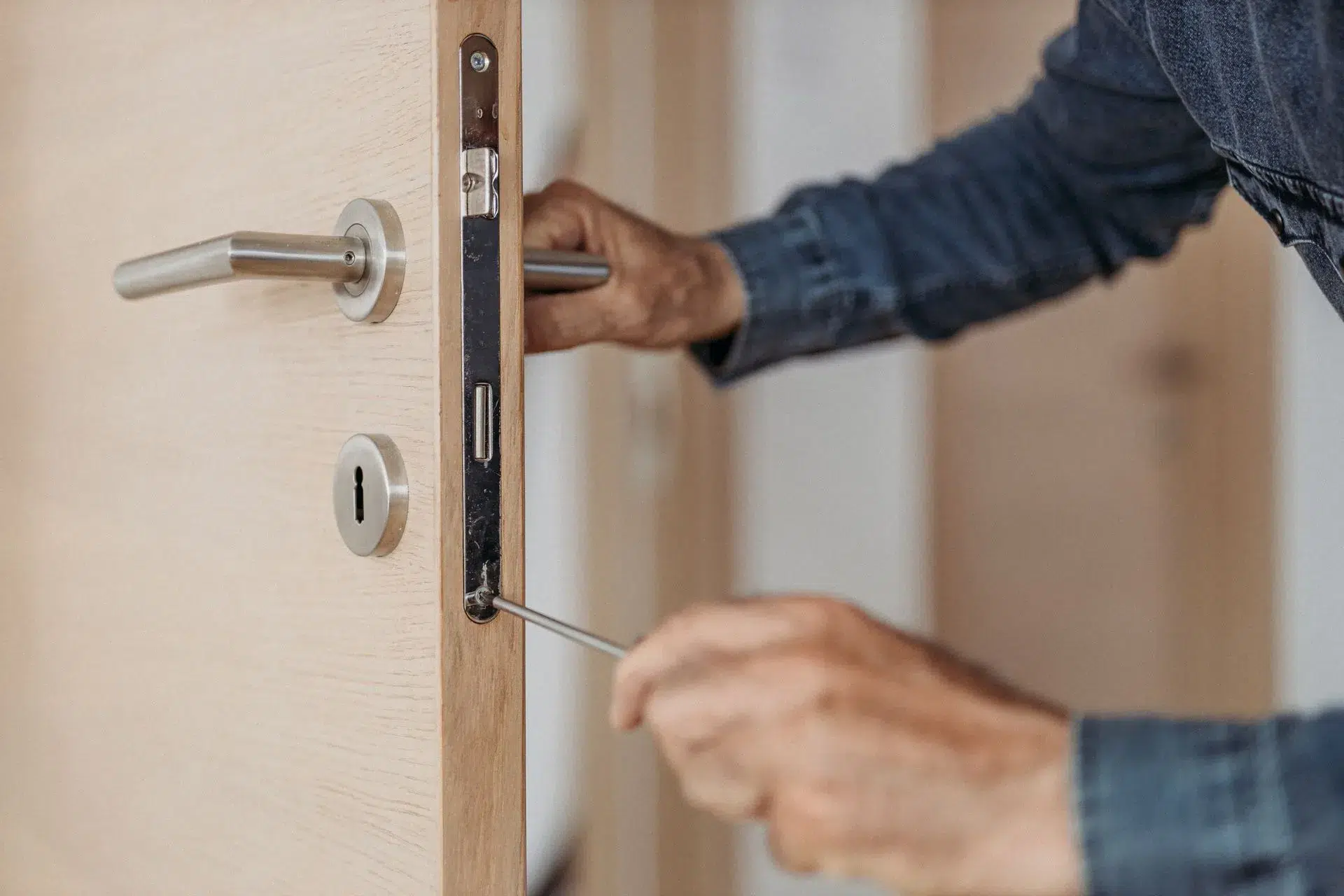
Standard hinges fail fast on commercial doors that open and close hundreds of times a day. Sagging frames, worn pivot points, and misaligned latches are problems we see constantly in retail spaces, medical facilities, and office buildings that were fitted with the wrong hardware from the start. Understanding how continuous hinges and pivot systems differ gives you a real advantage when it comes to reducing repairs and keeping your entryways secure. This guide breaks down how each option works, which situations call for each type, and what to consider before upgrading your commercial door hardware.
What Are Continuous Hinges and How Do They Differ From Standard Hardware?
A continuous hinge, sometimes called a piano hinge, runs the full length of a door from top to bottom. Instead of concentrating stress at two or three fixed points the way barrel hinges do, a continuous hinge distributes the load evenly across the entire door height. This design significantly reduces wear on both the door and the frame over time. Commercial-grade continuous hinges are typically made from heavy-duty steel or aluminum and are built to handle millions of cycles without degrading. The result is a longer service life and fewer alignment issues compared to traditional hinge configurations.
When Do Continuous Hinges Make the Most Sense for Commercial Doors?
Continuous hinges perform best in environments where doors experience high daily cycle counts and where security is a priority. Strong candidates include:
- Schools and hospitals with constant foot traffic
- Retail stores and multi-tenant office buildings
- Exterior doors where tamper resistance matters
- Heavy or oversized doors on aluminum storefronts
Because the full-length hinge eliminates exposed barrel knuckles on the exterior side, it reduces tampering risk on commercial entryways. If your building already works with commercial door hardware services, a continuous hinge upgrade is often a natural next step when doors start showing signs of wear.
What Are Pivot Hinges and Where Do They Fit In?
Pivot hinges are mounted at the top and bottom of a door rather than along the side edge. The door rotates on a single vertical axis, which allows for heavier door weights and more dramatic architectural designs. Pivot systems are commonly used in modern commercial buildings, hotels, and high-end storefronts where large glass or solid-core doors need to swing cleanly without visible hardware on the frame face. Businesses that have invested in commercial access control systems often find that pivot doors pair well with electronic strike plates and magnetic locks.
That said, pivot doors require precise installation to maintain alignment. A poorly set pivot can lead to gaps, drafts, and latch problems that compromise both comfort and security.
Are There Situations Where One Clearly Outperforms the Other?
Yes, and the right answer usually comes down to door weight, traffic volume, and security requirements. Here is a quick breakdown:
- Continuous hinges work best for interior and exterior doors with high cycle counts
- Pivot systems suit heavy, architecturally significant doors on high-profile buildings
- Continuous hinges offer better vandal resistance since there are no exposed hinge pins
- Pivot systems give designers flexibility that traditional hinge placements cannot match
For businesses evaluating overall door security alongside master key systems or rekeying, the hinge type can affect which lock bodies and reinforcement hardware will work best on the frame.
What Should You Ask Before Upgrading Your Commercial Door Hardware?
Before choosing between continuous hinges and pivot systems, have a professional assess your door frame condition, the door's weight and size, and the frequency of use. A frame that has already been weakened by years of stress may need reinforcement before new hardware will perform correctly. You should also confirm whether your existing locks, closers, and exit devices are compatible with the new hinge style. If your building has commercial door closer systems already installed, a switch to pivot hardware may require adjusting or replacing those closers to maintain proper swing resistance and ADA compliance. Getting these details sorted upfront prevents costly callbacks and keeps your doors operating smoothly from day one.
Putting It All Together for Your Michigan Business
Choosing the right hinge system shapes how secure, reliable, and long-lasting your commercial entryways will be for years to come. Continuous hinges deliver outstanding durability and tamper resistance for high-cycle doors. Pivot systems bring structural strength and design versatility when large or architecturally significant doors are involved. Both options represent a meaningful upgrade over worn or undersized standard hardware. The key is matching the right product to your specific door conditions, traffic patterns, and security goals.
LKE Locksmith has been helping businesses across Holly, Oakland County, and surrounding Michigan communities make smart decisions about commercial locksmith services since 2011, with over 60 years of combined experience on our team. If your commercial doors are showing signs of wear or you are planning a hardware upgrade, contact us and we will walk you through your options with honest, straightforward guidance and upfront pricing.